
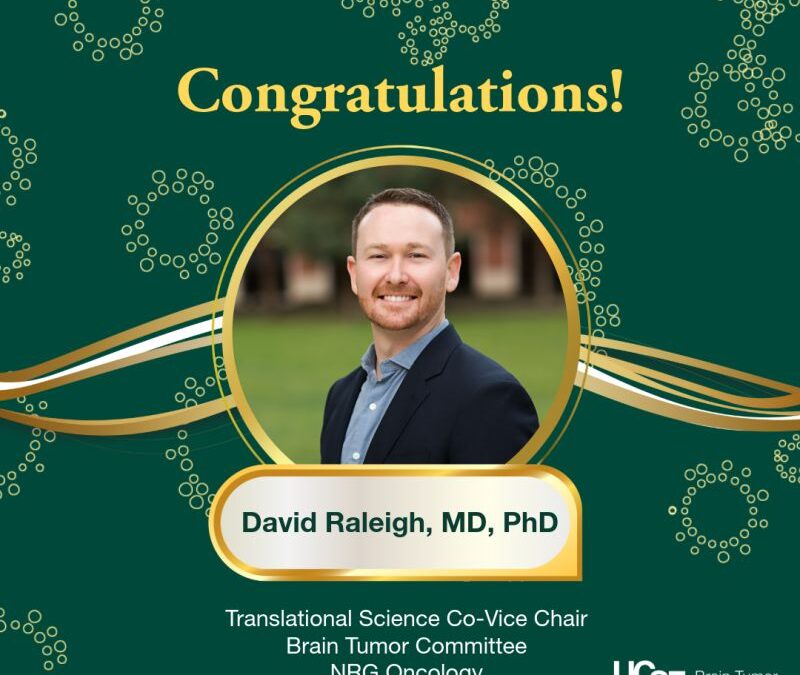
David R. Raleigh, MD, PhD, will become the Translational Science Co-Vice Chair of the NRG Brain Tumor Committee effective March 1, 2026. Dr. Raleigh is a physician–scientist and Associate Professor at the University of California San Francisco with joint appointments in Radiation Oncology, Neurological Surgery, and Pathology, where he also serves as the Michael McDermott, MD, Endowed Professor and the Wolfe Family Endowed Professor of Meningioma Research. His career is defined by the integration of cutting-edge translational science with leadership in national clinical trials to improve outcomes for patients with brain tumors. Dr. Raleigh directs a highly productive laboratory focused on the genomic, epigenomic, and cellular mechanisms underlying brain tumor heterogeneity, evolution, and therapeutic resistance, with seminal discoveries that have redefined meningioma classification, identified conserved biological drivers across species, and uncovered novel therapeutic vulnerabilities. His work has led to the development of multiple clinically actionable biomarkers, including DNA methylation and gene expression signatures published in multiple journals which now directly inform patient stratification and treatment decisions. These discoveries underpin several cooperative group trials within NRG Oncology, where he has played a central leadership role as Study Chair of the randomized phase III NRG-BN015 trial and as Translational Principal Investigator for NRG-BN2222 and NRG-BN2527, incorporating biomarkers developed in his laboratory and leveraging archival NRG and RTOG biobank specimens. Dr. Raleigh has made foundational contributions to the biology of schwannomas, ependymomas, medulloblastomas, and glioblastoma, including studies on Hedgehog signaling, CDK4/6 dependence, and tumor stem cell populations. He has sustained an exceptional record of NIH funding, serving as principal investigator or project leader on multiple R01, P01, U54, UH3, R21, and K08 awards. Equally notable is his commitment to mentorship, education, and collaborative leadership, demonstrated through extensive training of junior investigators, leadership roles within UCSF and national societies, and active participation in the NRG Brain Tumor Committee.