
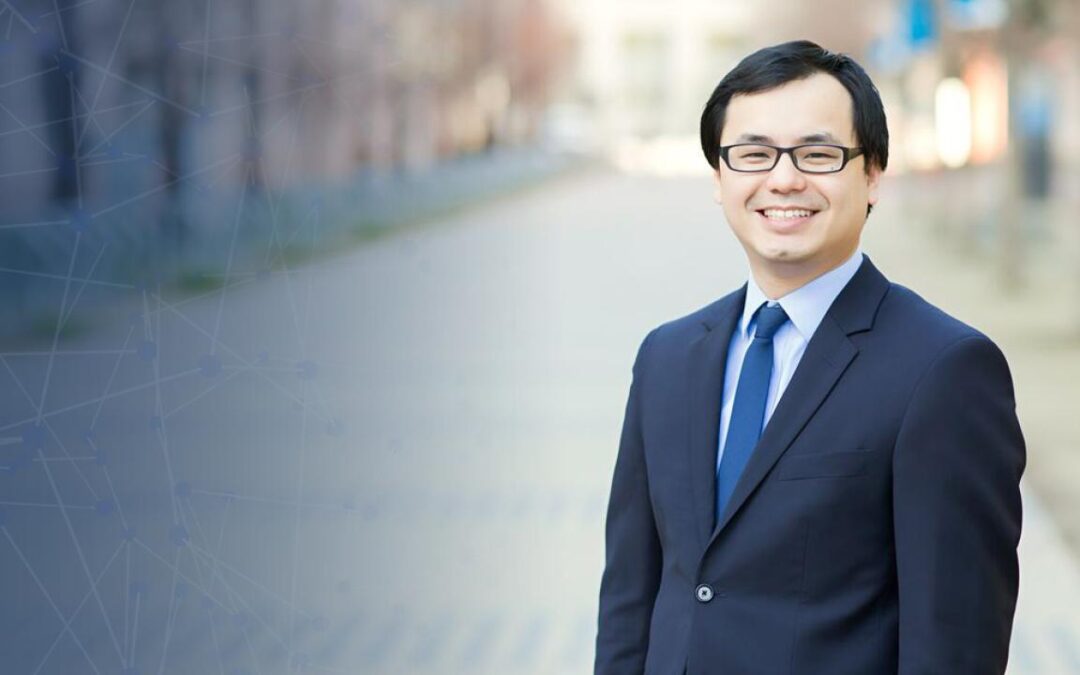
Julian Hong, MD, discusses opportunities for AI in research and care, and why faculty and trainees will be essential to what comes next.
As AI continues to reshape medicine and biomedical research, the Cancer Center is taking a thoughtful approach to its potential—and its limitations. Below, Julian Hong, MD, the Cancer Center’s new head of AI, discusses the role AI can play in improving patient care, accelerating discovery, and enabling new research, while emphasizing the importance of data quality, privacy, reproducibility, and real-world usefulness. Dr. Hong also shares how faculty, trainees, and early-career investigators can help shape the cancer center’s AI future.
Q: This is a new role in the cancer center. How do you see its purpose, and what do you hope to accomplish?
AI is playing an increasingly important role in medicine, and I see the role as helping the cancer center develop a strategy for AI. It’s important for us to make sure that we are making AI and its capabilities useful across our clinical and research communities. Too often, AI can be a solution looking for a problem, and the real-world gains can be more modest than the excitement around the technology might suggest. My goal is to make sure we focus on where AI is genuinely useful, whether that means improving care for our patients, accelerating our research, or enabling us to tackle questions we couldn’t address before.
Read Full Article here via UCSF Helen Diller Family Comprehensive Cancer Center